Gasoline Safety Cans: Regulations and Compliance
Purchasing fuel containers for commercial outdoor power equipment operations requires navigating requirements from multiple federal agencies. The Environmental Protection Agency, Occupational Safety and Health Administration, and Department of Transportation each establish distinct standards affecting which fuel containers are permissible for business use. For landscape professionals, tree care companies, and construction operations relying on gas-powered equipment like mowers, trimmers, and chainsaws, understanding this regulatory framework protects businesses from substantial fines while ensuring workplace safety.
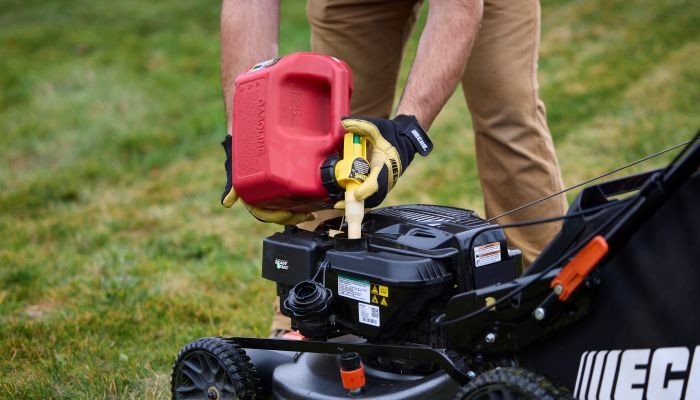
The Color Coding System: Your First Line of Defense
The fuel container color designation system prevents costly and dangerous fuel mix-ups while providing critical information to emergency responders. Red containers hold gasoline exclusively, yellow containers are for diesel fuel, blue designates kerosene (though blue can also indicate water, requiring attention to labeling), and green containers hold flammable oils including pre-mixed two-stroke fuel. Black containers serve as general-purpose vessels approved for any fuel type.
Both OSHA and the California Air Resources Board mandate adherence to this color coding system. In emergency situations involving fuel spillage or fire, first responders can immediately identify container contents by color, enabling appropriate response without consulting personnel who may be unavailable. The system also prevents equipment damage from misfuelling incidents. Putting diesel fuel into a gasoline-powered mower necessitates field repairs, equipment downtime, and labor costs that far exceed the convenience of grabbing whatever container happens to be available.
While modern safety cans can safely contain all fuel types from a materials standpoint, maintaining color designation discipline prevents human error. Professional operations benefit from clear protocols requiring that fuel types match their designated container colors without exception.
EPA and CARB Requirements: Preventing Evaporation and Spillage
The EPA and California Air Resources Board establish baseline requirements focusing on preventing fuel evaporation and spillage that contributes to air pollution. These regulations mandate that safety cans maintain complete sealing during storage and use, with no atmospheric venting during pouring operations. Additionally, containers must include automatic shut-off mechanisms that stop fuel flow when the receiving tank reaches capacity. Most manufacturers implement this through spring-loaded compression systems in the pour spout.
These features explain why modern safety cans require maintaining pressure on the spout mechanism throughout pouring. While this design demands more attention than older open-vent cans, it prevents both vapor emissions and overflow spills. However, containers meeting only EPA and CARB standards remain insufficient for commercial workplace applications, which fall under additional OSHA workplace safety regulations.
OSHA Standards: Protecting Workers from Fuel Hazards
OSHA requirements address fuel container use in occupational settings, focusing on protecting workers from fire, explosion, and chemical exposure hazards. Acceptable safety cans must incorporate spring-closed lids that automatically seal when not being opened, spout covers that close to prevent fuel exposure, and cannot exceed five gallons in capacity. Containers must include pressure relief mechanisms that vent expanding vapors during fire exposure rather than rupturing catastrophically. Finally, OSHA mandates flash-arresting screens in container openings, preventing external flames from propagating into the vapor space.
OSHA itself does not operate product testing programs. Instead, OSHA standards reference testing by independent certification bodies. Containers bearing Factory Mutual or Underwriters Laboratories listing marks have been tested to standards satisfying OSHA requirements. This distinction requires attention: UL listing indicates comprehensive testing and approval, while UL classification represents limited evaluation that does not constitute full OSHA compliance. Professional buyers must verify containers carry proper listing marks.
Department of Transportation: Requirements for Fuel in Transit
DOT regulations apply when fuel containers are transported on public roadways in commercial vehicles. The determining factor is straightforward: if regulations require the commercial vehicle to display a DOT number, fuel containers must meet DOT approval standards.
DOT permits containers up to eight gallons, while OSHA limits workplace containers to five gallons. Fortunately, OSHA recognizes DOT-approved containers as acceptable for occupational use if they remain at or below five gallons. Five-gallon DOT-approved containers satisfy both requirements simultaneously, simplifying compliance for operations needing to meet both standards.
DOT-approved containers typically incorporate all OSHA-required safety features plus additional protections addressing transportation hazards. DOT approval appears as marking on the container itself, providing clear verification for enforcement inspections. One valuable DOT requirement mandates that containers remain upright when full and not leak when inverted, protecting against fuel loss during normal transportation.
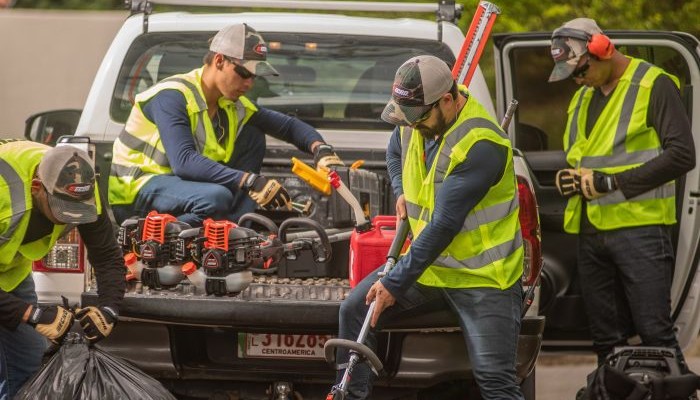
A visual indicator of DOT approval involves rollover protection for the pour spout. Since the spout represents a vulnerable point during accidents, DOT requires physical protection preventing spout damage during rollover events. The presence of substantial protective structures around or above the spout suggests DOT compliance.
DOT maintains a Materials of Trade exemption that many landscape and tree care operations fall under, permitting somewhat less stringent requirements than full hazardous materials regulations. However, understanding this exemption's applicability requires reviewing both federal regulations and state requirements.
State Regulations and Type Classifications
Federal regulations establish baselines, but individual states maintain authority to impose additional standards governing fuel container use within their jurisdictions. Professional operators working across state lines must understand requirements in each state they serve. This regulatory complexity represents one factor making battery-powered equipment increasingly attractive, as it eliminates fuel transportation and storage compliance entirely.
Safety cans are categorized as Type 1 or Type 2 based on opening configuration.
- Type 1 cans feature a single opening serving both filling and emptying functions.
- Type 2 cans provide separate openings for filling and pouring, typically facilitating faster fuel transfer.
OSHA accepts either type, but DOT requires Type 2 cans for transportation applications.
Selecting Professional-Grade Containers
The commercial fuel container market offers options balancing compliance, durability, and cost. Steel containers provide maximum durability and fire resistance, ideal for operations prioritizing longevity and worst-case protection. Steel containers meeting full DOT approval typically exceed three hundred dollars for five-gallon capacity but deliver corresponding performance assurance.
Polymer-based containers provide full regulatory compliance at substantially lower price points, generally around sixty dollars for five-gallon DOT and OSHA approved models. Modern polymer containers incorporate all required safety features while offering lighter weight and resistance to denting or corrosion.
Proper container selection involves verifying certification markings rather than relying on appearance. Containers should clearly display FM or UL listing marks for OSHA compliance and DOT marking for transportation compliance. Many professional operators have adopted polymer containers featuring innovative designs that achieve DOT rollover protection through spout positioning rather than external cages, reducing cost while maintaining compliance. The widespread adoption of specific models has spawned accessory markets including mounting racks enabling efficient fueling without removing containers.
Containers Inappropriate for Commercial Use
Several fuel container categories remain inappropriate for professional business use despite their availability. Racing-style fuel cans carry no EPA, OSHA, or DOT certifications and expose businesses to regulatory violations. NATO-style containers or Jerry cans present mixed pictures, with some models meeting standards while others do not. Any NATO-style container requires careful certification marking inspection, as many inexpensive versions fail even basic EPA requirements.
The most commonly encountered inappropriate containers are consumer-grade safety cans from home improvement retailers. While these meet EPA and CARB emissions requirements, they lack additional safety features OSHA requires for workplace use. These consumer cans are engineered specifically for homeowner applications rather than commercial operations.
For sole proprietor operations without employees, consumer-grade containers technically remain permissible since OSHA workplace requirements only apply when employees are present. However, businesses planning growth should adopt OSHA-compliant containers from the outset. Beyond satisfying regulations when hiring, professional-grade containers typically offer superior usability compared to consumer models.
Professional operators should be cautious about compliance guidance from unofficial sources. Some organizations provide information about fuel container compliance that does not accurately reflect OSHA's actual requirements. When questions arise, consulting OSHA's documentation directly provides authoritative answers.
Implementing Compliant Practices
Building compliant fuel handling systems starts with selecting appropriate containers but extends to establishing proper protocols. Operations should audit current container inventory, identifying units lacking proper certifications and scheduling replacement. When purchasing, verification of certification markings should occur before completing the purchase.
Establishing clear labeling and color-coding discipline prevents misfuelling incidents. Even with properly colored containers, adding clear permanent labels identifying fuel type provides additional protection. Training all personnel on proper fueling procedures, including operational characteristics of modern safety can designs, reduces frustration and ensures consistent safe practices.
Regular inspection for damage represents another important practice. Dents, cracks, or damaged spouts compromise safety features that certification testing verified. Damaged containers should be removed from service promptly. While professional-grade containers are engineered for demanding use, their safety features depend on structural integrity.
Understanding and complying with fuel container regulations protects businesses from enforcement actions resulting in substantial fines. More importantly, these regulations exist because fuel handling presents genuine workplace hazards. Containers engineered and certified to current standards substantially reduce fire, explosion, and environmental contamination risks compared to older designs. The investment in proper equipment and compliant practices serves both legal and practical purposes, creating safer work environments while satisfying regulatory obligations.
Adapted from content provided by Mike from This Old Relic.
Mike Arch
This Old Relic
2026 Member
Bio:
Mike Arch of this Old Relic is a lawncare professional and mechanic. He specializes in maintenance and equipment repair.