Essential Hardscaping Equipment & Tools
Starting a hardscaping business requires strategic equipment investment spanning personal protective equipment, hand tools, power equipment, and specialized machinery. Understanding which tools deliver essential functionality versus those that represent later-stage investments helps new operations allocate capital efficiently while established businesses identify capability gaps in their current inventories.
Personal Protective Equipment: Non-Negotiable Foundation
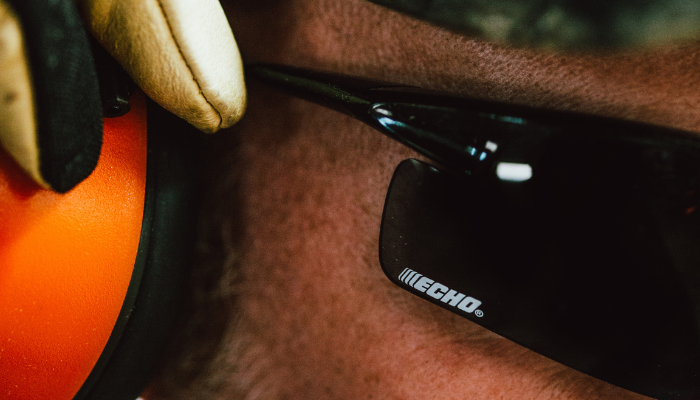
Personal protective equipment forms the foundation of safe hardscape operations. Essential PPE includes hearing protection for extended power tool exposure, knee pads for ground-level work setting pavers and wall blocks, respiratory protection against silica dust during cutting operations, impact-resistant safety glasses, and work gloves protecting hands from abrasion and materials handling injuries.
Beyond individual protection, fully stocked first-aid kits must be present on every job site. This represents both practical safety measures and regulatory compliance—workplace safety agencies mandate adequate first-aid supplies for employee protection. The kit should address common hardscape injuries including cuts, abrasions, eye injuries from dust or debris, and musculoskeletal strains.
Fundamental Hand Tools for Hardscaping
Hand tools constitute the core hardscaping tools inventory that enables daily work. Multiple mallet styles serve different purposes—rubber mallets for setting pavers without surface damage, dead-blow mallets for adjusting wall blocks, and stake pounders for driving landscape stakes and edging. Standard claw hammers remain essential for various fastening and demolition tasks. Quality chisels in multiple sizes enable precise material removal and adjustment.
Marking tools deserve attention—red marking pencils that resist weather and water washout create durable layout marks on pavers and blocks. Their crisp lines and low cost make them preferable to alternatives. Permanent markers capable of marking on wet or dry surfaces provide versatility for varied conditions.
Measurement and layout tools include tape measures in multiple lengths. While 25-50 foot tapes handle overall project layout, compact 16-foot tapes balance portability and functionality for regular measurements. Chalk lines in multiple colors enable marking different elements on varied surface colors. Framing squares and speed squares in multiple sizes facilitate accurate 90-degree and 45-degree marking on blocks and pavers.
Torpedo levels prove indispensable for setting wall blocks accurately—their compact size enables checking individual block level and alignment efficiently. Longer levels up to 8 feet verify overall grade and alignment across broader sections.
Utility knives with sharp replacement blades handle countless cutting and trimming tasks. Large-frame caulking guns apply construction adhesives for cap installation and specialty applications. String lines stretched between stakes maintain alignment for walls and establish proper grades across installations. Marking paint wands extend reach for layout work, reducing bending and improving line quality when marking curves and straight runs.
Essential Landscaping Business Essentials: Basic Equipment
Core equipment supports the hand tool inventory with necessary materials handling and site preparation capabilities. Quality wheelbarrows justify their cost through durability and ergonomics—cheap models fail rapidly under hardscape material loads. Professional-grade garden hoses provide essential water supply for washing tools and product, wetting gravel base, and supporting wet-cutting operations.
Loppers handle root cutting and vegetation management during site preparation. Pry bars and digging bars provide leverage for material positioning, excavation in difficult soil, and adjusting heavy elements. Landscape rakes speed base material spreading across larger areas compared to standard rakes.
Shovel inventory should include square-point shovels for moving granular materials, flat shovels for edging and final grading, and spades for excavation. Steel rakes level base materials while leaf rakes clear sites of debris. These tools see constant use—investing in mid-to-upper tier quality with fiberglass handles balances durability and weight, providing tools that withstand professional use while reducing operator fatigue.
Level collections grow with business needs. Operations typically maintain 6-12 levels ranging from compact 1-foot torpedo levels through 4-foot and 6-foot levels to 8-foot plate levels for verifying large-area grade accuracy.
Broom selection matters for hardscape finishing. Soft-bristle brooms clean finished surfaces without scratching while stiff-bristle brooms remove stubborn materials and assist polymeric sand installation. Maintaining 2-3 of each type ensures availability for simultaneous tasks and accounts for wear.
Screed systems dramatically improve paver installation quality and efficiency. Professional screed setups use pipe rails (typically 1/2-inch or 1-inch) with custom screed boards that ride the rails, ensuring consistent paver bedding sand depth. While representing meaningful investment, quality screed systems deliver professional results while reducing back strain during sand leveling.
.png)
Recommended Tools for Hardscaping: Laser Transits and Survey Equipment
Laser transits represent the next capability tier beyond basic hand tools. These instruments establish accurate grades and verify level across project areas, dramatically improving installation precision. Entry-level laser levels around $400-500 provide adequate accuracy for small to medium hardscape projects. These basic units establish level reference points and verify grade effectively.
Mid-range transits at $800-1,000 add slope capability, enabling precise grade establishment for drainage and design elements requiring specific pitch. This functionality proves valuable as project complexity increases beyond simple level installations.
Higher-end transits exceeding $1,000 offer extended range, improved accuracy, and enhanced durability for daily professional use across large job sites. Investment at this level makes sense for established operations running multiple concurrent projects.
Power Equipment: Cutting and Site Management
Power equipment investments scale with business volume and project types. Handheld cutoff saws represent the initial cutting capability investment. Fourteen-inch gas-powered saws cut block and pavers effectively but add substantial weight during extended use. Their size prevents tight radius cuts on curved paver installations.
Battery-powered 9-inch cutoff saws complement larger gas saws by providing maneuverability for intricate cuts and tight radiuses. Maintaining 3-4 batteries in rotation enables all-day operation. The reduced weight and vibration compared to gas saws reduce operator fatigue during detail work.
Backpack blowers serve multiple critical functions in hardscape operations. Beyond clearing leaves and debris, they're essential for polymeric sand installation—removing excess sand dust from paver surfaces before water activation. Quality backpack units see nearly daily use across varied tasks.
Advanced Cutting Equipment for High-Volume Operations
Established operations processing significant paver volumes benefit from stationary wet-cutting saws. These table-mounted saws feature water reservoirs providing dust-free cutting with superior precision compared to handheld units. They cut materials up to 4 inches thick and execute complex angle cuts and tight radius work that handheld saws cannot match efficiently.
The water reservoir approach creates some mess compared to alternative dust-collection systems but delivers excellent cooling and dust control. These saws require adequate electrical supply—attempting to operate from standard residential circuits risks tripping breakers and potentially damaging saw motors over time. Quality portable generators (5,000+ watts) provide reliable power while supporting other equipment needs including lights and air compressors.
Strategic Equipment Investment Approach
Successful hardscaping business equipment investment follows logical progression. Initial operations should prioritize personal protection, essential hand tools, basic power equipment, and fundamental site preparation capabilities. This foundation enables quality work on entry-level projects while limiting capital exposure during business establishment.
As revenue grows and project complexity increases, investments expand into laser transits, advanced cutting equipment, and specialized tools addressing specific installation challenges encountered regularly. This staged approach aligns equipment capability with actual business needs rather than over-investing in capabilities that generate insufficient return.
Equipment quality represents another strategic consideration. Professional-grade tools commanding premium prices deliver extended service life, better ergonomics, and superior performance compared to consumer-grade alternatives. For tools seeing daily use—shovels, rakes, levels, cutting equipment—investing in quality reduces long-term costs through extended replacement intervals and improved productivity. For specialty tools used occasionally, mid-grade equipment may provide adequate performance at more accessible price points.
Building comprehensive hardscaping equipment inventories occurs incrementally across business development rather than requiring complete capability from day one, enabling sustainable growth aligned with operational revenue and capability expansion.
Adapted from content provided by Brian from BL Landscapes.
Brian Linson
BL Landscapes
2025 Member
Bio:
Brian Linson is the owner of BL Landscapes in Whidbey Island. He is a landscaper and hardscaper that focuses on bringing out his client's vision in their outdoor space.