Hip Throttle vs Tube Throttle: Choosing Backpack Blower Control Configuration
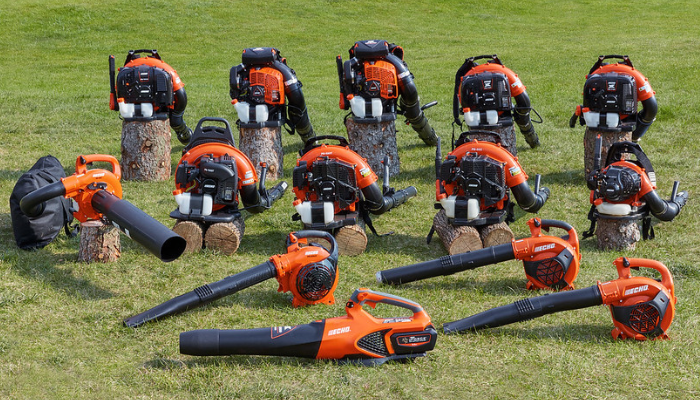
Professional backpack blowers are available in two distinct throttle control configurations: hip-mounted and tube-mounted. Understanding the functional differences and operational implications of each configuration helps landscape professionals select equipment matching their specific work preferences and application patterns.
.png)
The Evolution of Backpack Blower Technology
Modern backpack blowers evolved from agricultural duster and mister equipment developed in the 1950s. These early chemical application devices used engine-powered air streams to distribute pesticides and fertilizers across crops. As users recognized the utility of concentrated air flow for debris management, manufacturers adapted the technology by removing chemical distribution systems while retaining the powerful air delivery mechanisms.
ECHO pioneered this equipment category, introducing the first engine-powered backpack duster/mister in 1950, followed by the popular DM-9 model in 1955. The PB-9, introduced in 1971, became the first commercially available backpack blower designed specifically for leaf and debris management rather than chemical application. This innovation established backpack blowers as essential landscape maintenance equipment. The handheld blower format emerged in 1978 with the PB-200, providing an alternative configuration for lighter-duty applications.
Hip-Mounted vs Tube-Mounted Throttle: Understanding the Configurations
Manufacturers often offer both hip-mounted throttle and tube-mounted throttle versions built on the same engine platform and displacement. Air speed and air volume ratings are typically the same between configurations because the blower housing and engine remain unchanged. The primary operational difference is the location of the throttle control, though handle design, cable routing, and harness layout may vary slightly. For most users, the choice between hip-mounted and tube-mounted throttles comes down largely to operator preference and comfort.
Hip Throttle Configuration
Hip-mounted throttle systems position the throttle control on the harness near the operator's left hip, accessible to the left hand while the right hand guides the blower tube. When cruise control is engaged to maintain a constant throttle setting, this configuration allows operators to briefly remove their right hand from the tube if necessary. The hip throttle approach appeals to operators who prefer separating throttle control from tube manipulation or who frequently work in situations where right-hand flexibility improves efficiency.
.png)
Tube Throttle Configuration
Tube-mounted throttles integrate the throttle control directly into the blower tube handle, allowing operators to control airflow while holding the blower tube. Many operators find this configuration intuitive because throttle adjustment occurs directly at the handle used to aim the air stream. Most modern tube-mounted systems also include cruise control features that allow operators to maintain a constant throttle setting during extended operation.
Making the Selection: Hip Throttle or Tube Throttle
The hip throttle or tube throttle decision generates strong preferences among professional operators, with advocates equally divided between configurations. Neither configuration delivers objective performance advantages—the choice centers entirely on individual operating style and comfort.
Operators who prefer adjusting throttle with their left hand and keeping the tube handle dedicated to guiding airflow often gravitate toward hip-mounted systems. Those who find integrated tube-and-throttle control more intuitive select tube-mounted configurations. Some operators appreciate cruise control accessibility on hip-mounted units, though this distinction diminishes as tube-mounted throttles increasingly offer equivalent features.
The most effective selection method involves hands-on evaluation. Operators should test both hip vs tube throttle configurations under actual working conditions, evaluating which system feels more natural during extended operation. Comfort and control preferences become apparent quickly during field testing, enabling confident selection decisions.
Professional landscape operations running multiple blowers may choose to maintain both configurations within their equipment inventories, enabling crew members to select configurations matching their individual preferences. This approach maximizes operator comfort and productivity across diverse working styles while maintaining equipment standardization at the engine platform level.
ECHO MEANS BUSINESS