Using Hedge Trimmers for Brush Hogging
Hedge trimmers excel at shaping ornamental plantings, but they also serve effectively for cutting dense weed growth and light brush that exceeds string trimmer capabilities. Understanding when hedge trimmers provide the optimal tool for vegetation management expands operational flexibility while reducing equipment wear and consumable costs.
.png)
What is Brush Hogging?
Brush hogging refers to cutting down thick vegetation, overgrown weeds, and light woody growth in areas where standard mowing equipment cannot operate effectively or where vegetation has grown too tall and dense for conventional maintenance. Traditional brush hogging specifically refers to heavy-duty rotary cutters mounted on tractors that clear thick vegetation and brush. In smaller-scale landscape operations, the term is sometimes used informally to describe clearing heavy weed growth or light brush with handheld equipment. For landscape professionals, this often involves managing rural properties, vacant lots, roadside areas, or neglected landscapes returning to service.
When String Trimmers Fail
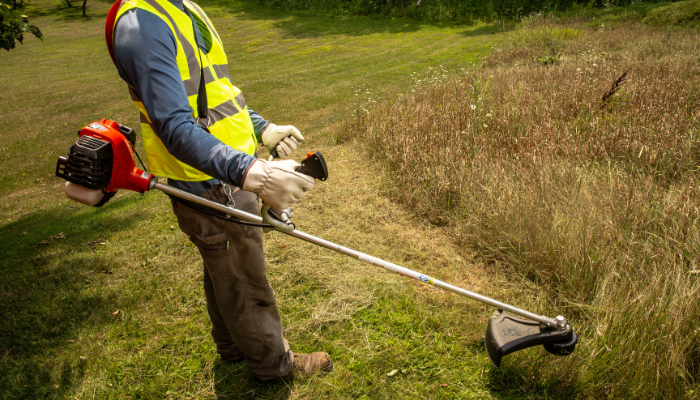
String trimmers handle grass and light weeds effectively, but thick or woody-stemmed weeds can create problems as stems become tougher and more rigid. Trimmer line breaks repeatedly against these harder stems, consuming expensive line while making little cutting progress. Dense weed patches compound this inefficiency—operators spend more time reloading line than actually cutting.
These conditions frequently occur on rural properties, unmaintained lots, ditch banks, and properties transitioning from neglect back to regular maintenance. Attempting to power through thick-stemmed vegetation with string trimmers wastes time and materials while causing operator frustration.
Hedge Trimmers as Brush-Cutting Tools
Hedge trimmers equipped with reciprocating blades can shear through many thick weeds and light brush that string trimmers struggle to cut. The exact cutting capacity varies by trimmer model, blade condition, and plant species, so operators should avoid forcing the tool through material that exceeds the manufacturer’s recommended limits. The blade action shears through material that deflects or breaks trimmer line, maintaining cutting efficiency in challenging vegetation.
This approach proves particularly effective for clearing tall weed growth including ragweed, pigweed, dock, and other species that develop substantial woody stems by late summer.
Small woody growth within the trimmer’s cutting capacity can also be managed effectively, though thicker brush may require more appropriate equipment such as brush cutters or pruning tools.
Designating an older hedge trimmer for brush-cutting applications protects primary ornamental trimming equipment from accelerated wear while providing an effective vegetation management tool. Even hedge trimmers with moderately worn blades retain sufficient cutting ability for rough vegetation work, extending their useful service life beyond ornamental applications.
Operational Technique and Ergonomics
When cutting heavy weeds or brush with hedge trimmers, operators should wear appropriate protective equipment including eye protection, gloves, long pants, and sturdy footwear, as hidden debris or woody stems can create flying fragments. Brush cutting with hedge trimmers requires working closer to ground level than ornamental trimming. Two approaches address the ergonomic challenges:
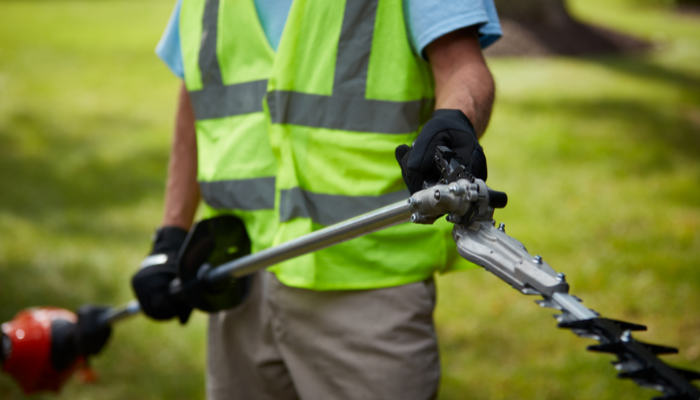
Articulating head attachments on ECHO PAS systems or dedicated pole hedge trimmers allow operators to adjust blade angle while maintaining upright posture. This configuration mirrors standard string trimming body position while delivering superior cutting power against woody vegetation. The extended reach also provides safety distance when cutting near obstacles or uneven terrain.
Standard hedge trimmers can be used for this work but often require bending or crouching to reach low vegetation, which can lead to fatigue during extended operation. This posture causes lower back strain during extended operations. Taking frequent breaks and alternating tasks helps manage fatigue. Despite the ergonomic challenge, the cutting efficiency often makes this approach faster overall than struggling with inadequate string trimmer performance.
Avoid contacting the ground, rocks, or hard debris with hedge trimmer blades, as this can dull the cutting edges quickly and may damage the blade assembly.
Strategic Applications for Commercial Operations
Landscape operations serving rural or semi-rural territories encounter brush-cutting demands regularly. Properties with drainage ditches, fence lines, or unmaintained perimeter areas present these conditions seasonally. Rather than declining this work or pricing it at tractor brush hog rates, hedge trimmer brush cutting provides a profitable middle ground—particularly for areas inaccessible to larger equipment or where vegetation density doesn't justify mobilizing tractors.
Charging appropriate rates for this specialized work—recognizing it exceeds standard trimming difficulty—ensures profitability while offering clients cost-effective solutions for challenging vegetation management situations.
Understanding hedge trimmers' versatility beyond ornamental applications adds capability to equipment inventories already present in most landscape operations, maximizing return on existing tool investments.
Adapted from content provided by Wyatt.
Wyatt Bedell
2020 Member