Safe Masonry Saw Operation
Masonry saws enable precise, efficient cutting of brick, stone, and concrete in hardscaping applications, but these powerful tools present significant safety and health hazards when operated improperly. Understanding proper operating procedures, equipment maintenance requirements, and protective measures substantially reduces injury risk while ensuring regulatory compliance.
Understanding the Hazards
Masonry saw operation involves multiple hazard categories that operators must recognize and mitigate. Physical injuries from blade contact—including cuts, lacerations, and amputations—represent the most immediate dangers. Electrical shock hazards exist with corded equipment, particularly in wet cutting applications. Noise exposure during extended operations can cause permanent hearing damage. Flying debris threatens eye safety. Gas-powered saws produce carbon monoxide (CO), a colorless and odorless gas that can quickly accumulate to deadly levels in enclosed or partially enclosed spaces. Gasoline-powered masonry saws should never be used indoors or in enclosed or poorly ventilated areas.
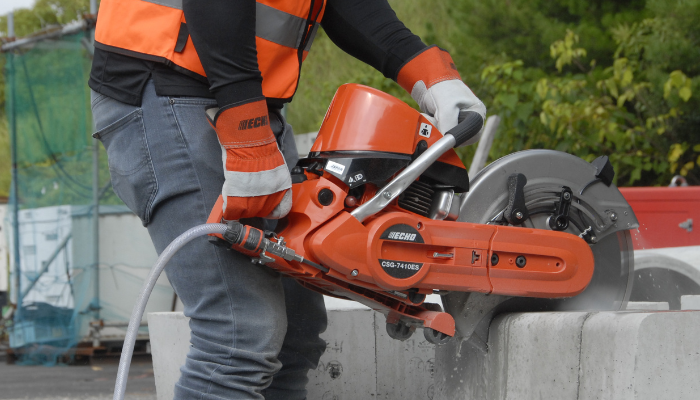
Beyond acute injury hazards, masonry cutting generates respirable crystalline silica dust—a serious long-term health threat. This fine dust, created when cutting materials containing silica like brick, stone, and concrete, causes silicosis, an irreversible and potentially fatal lung disease. Silica particles become trapped in lung tissue, creating scar tissue that progressively reduces oxygen absorption capacity. The disease develops through cumulative exposure over months or years, making dust control essential for every cutting operation.
Personal Protective Equipment Requirements
Comprehensive personal protective equipment forms the foundation of safe masonry saw operation. Eye and face protection through safety goggles and face shields prevents injury from flying particles and debris. Hearing protection—either earplugs or earmuffs—mitigates noise exposure from both the saw motor and cutting action. Steel-toed boots protect feet from dropped materials and equipment. Heavy-duty work gloves provide hand protection while maintaining adequate dexterity for tool control. Long sleeves and thick pants shield skin from abrasion and debris.
Respiratory protection may still be required even when dust control methods such as wet cutting are used. Under OSHA’s construction silica standard, respirators may be required depending on the type of saw, whether the work is performed indoors or outdoors, and the duration of cutting. When respirators are required, employers must implement a respiratory protection program that includes proper respirator selection, medical evaluations, fit testing, and worker training.
Operators should avoid loose-fitting clothing, jewelry, and dangling accessories that could become entangled in moving components. Long hair requires securing to prevent similar hazards.
Silica Dust Control: Wet Cutting Methods
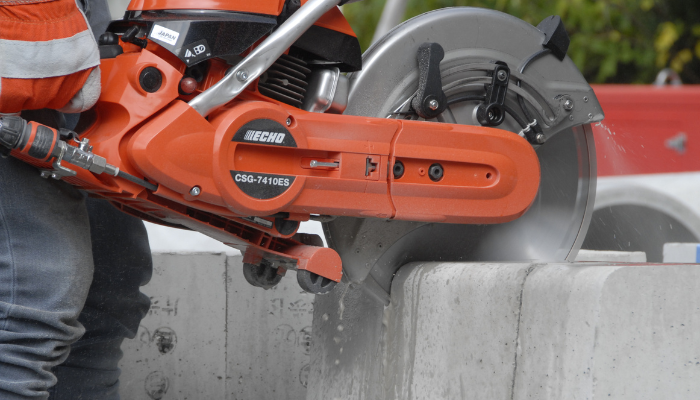
Wet cutting represents the most effective approach for controlling airborne silica dust during masonry saw operations. This method applies water directly to the cutting point, suppressing dust generation before particles become airborne. Many stationary masonry saws integrate water delivery systems with pumps for water recirculation, providing continuous dust suppression throughout extended cutting operations.
Handheld saws require external water sources—either pressurized containers carried by the operator or constant-flow sources like garden hoses connected to available water supplies. Effective wet cutting requires ensuring hoses connect securely without cracks or leaks, adjusting water flow to adequately wet the cutting area while cooling the blade, and maintaining clean water by frequently rinsing or replacing filters and changing basin water when it becomes laden with settled dust.
The water application must reach the actual cutting point rather than merely wetting the material surface. Proper nozzle positioning directs water flow to where blade teeth engage the material, maximizing dust suppression effectiveness.
Vacuum Dust Collection Systems
When wet cutting proves impractical—due to freezing conditions, electrical hazards from water near power sources, or site restrictions—vacuum dust collection systems provide alternative dust control. Effective systems incorporate four essential components: properly sized dust collection hoods that capture particles at the cutting point, vacuums with sufficient suction power to overcome the dispersive force of cutting, high-efficiency particulate air (HEPA) filters that capture fine silica particles in the exhaust stream, and appropriately sized hoses (typically 1.5 to 2 inches diameter) that maintain adequate airflow.
Vacuum system effectiveness requires proper maintenance. Operators must keep hoses clear of debris, kinks, and tight bends that restrict airflow. Filters require regular cleaning or replacement—self-cleaning filters should cycle periodically during operation, while manual filters need regular attention. Collection bags require changing before reaching capacity to maintain suction performance.
Electrical Safety Protocols
Electric masonry saws operating in wet environments require specific electrical protections. Use only electrical equipment that is listed and labeled for its intended purpose and operated according to manufacturer instructions. Do not remove or defeat grounding prongs on plugs or extension cords. Ground-fault circuit interrupter (GFCI) protection should be used to protect workers from electrical shock, particularly when operating equipment in wet or damp conditions. When permanent GFCI-protected outlets are not available, portable GFCI devices should be used.
Extension cords must be heavy-duty, outdoor-rated types with three-prong configurations that haven't been modified. Never remove ground prongs from plugs or extension cords—this safety feature provides essential protection against electrical shock. Cord routing should prevent tripping hazards while keeping cords away from cutting surfaces and wet areas where possible. When disconnecting equipment, grasp the plug rather than pulling cords, which can damage connections and create shock hazards.
Pre-Operation Equipment Inspection
Thorough equipment inspection before each use identifies problems before they cause injuries or equipment damage. Examine saw blades for cracks, chips, or excessive wear—damaged blades throw debris dangerously and should be replaced immediately. Verify blade sharpness, as dull blades require excessive force and increase binding risk. Check that manufacturer-approved blade guards and safety switches are present, properly positioned, and functioning correctly. Missing or damaged guards must be replaced before operating equipment.
Inspect electrical cords for fraying, exposed wires, or damaged insulation. Check that power tool casings show no cracks or damage. For gas-powered equipment, verify fuel caps seal tightly and check for fuel leaks that could ignite from engine sparks. Any equipment showing damage or excessive wear should be removed from service immediately and brought to supervisor attention.
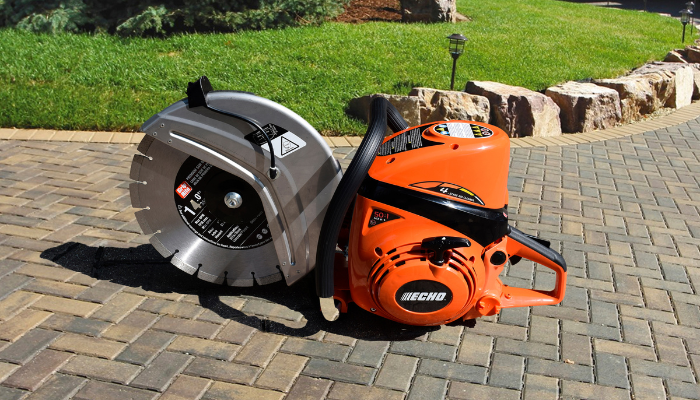
Use only blades that are designed for the specific saw and material being cut. Verify that the blade’s maximum rated speed (RPM) meets or exceeds the saw’s spindle speed. Ensure the blade size, arbor hole, and mounting flanges match the saw manufacturer’s specifications. Using incompatible or improperly rated blades can cause blade failure and serious injury.
Safe Operating Procedures
Proper operating technique begins before starting the saw. Ensure adequate lighting in the work area and clear the floor or ground of tripping hazards. Position work at comfortable waist height on stable surfaces—this prevents ergonomic strain from bent or awkward postures while providing better control. Verify the blade isn't contacting any surface before starting the saw, as contact during startup creates kickback hazards.
Maintain secure footing and balance throughout operations. Hold handheld saws with both hands, keeping body parts away from the cutting point. Keep bystanders at safe distances from the work area. Position yourself to avoid the plane of blade rotation—if the blade binds and breaks, fragments typically eject along the blade's rotational path. Allow the blade to reach full operating speed before beginning a cut, and feed the material into the blade slowly without forcing the saw. Forcing or twisting the blade in the cut can cause binding, kickback, or blade damage. Support materials properly so the cut does not pinch the blade during operation.
When carrying saws, turn them off first and hold handheld units away from the body until blades stop rotating. Never use legs to prop up or support saws during cutting. Avoid working on scaffolding with masonry saws due to stability and fall hazards.
Gas-powered saws require additional precautions. Never operate these units in enclosed or partially enclosed spaces where carbon monoxide can accumulate to dangerous levels. Before refueling, shut down the engine and allow cooling time—refueling hot equipment creates fire and burn hazards.
Always disconnect power or remove the spark plug connection before changing blades, cleaning the saw, or performing maintenance.
Maintenance and Storage
Proper maintenance extends equipment life while maintaining safety features. Keep blades sharp, clean, and properly lubricated. Store saws in dry locations protected from weather and physical damage. Regularly service equipment according to manufacturer specifications, addressing any developing problems before they compromise safety or performance.
Training and Competency
Operators must receive comprehensive training on the specific masonry saw models they'll use, including hazard recognition, proper operating procedures, dust control methods, and emergency response. Manufacturer operating instructions should be readily available for reference. Training should cover both hands-on operation and theoretical knowledge of why specific procedures matter for safety.
Safe masonry saw operation requires attention to multiple hazard categories simultaneously—blade contact, electrical shock, dust exposure, noise, and ergonomics. By implementing proper dust control, maintaining equipment correctly, wearing appropriate protective equipment, and following established operating procedures, operators substantially reduce injury and illness risk while completing hardscaping work efficiently.