Understanding Edger Blade Types
Professional landscape operations encounter multiple edger blade designs when maintaining equipment, yet surprisingly little information exists comparing their practical performance differences. Understanding how blade geometry affects cutting quality and edge longevity helps operations select blades optimizing results for their specific maintenance approaches.
Straight Blade Design
Straight edger blades feature simple flat geometry without curves or protrusions beyond the basic cutting edge. These blades are commonly supplied with many new edgers and are widely used as standard replacement blades across multiple equipment brands. The straightforward design cuts through turf and soil along a narrow path defined by the blade width, creating clean initial edges when operated correctly.
.png)
The simplicity of straight blade geometry provides certain advantages. Manufacturing costs remain lower compared to more complex designs, making replacement blades economical. The blade profile generates minimal resistance during cutting, requiring less engine power to maintain cutting speed through dense turf or compacted soil. Installation is typically straightforward, though operators should always verify blade orientation and mounting direction according to the equipment manufacturer’s instructions.
However, straight blades create relatively narrow cut widths. The edge they produce matches the blade's physical width without extending into a wider trench. This narrower cut path means edges may require more frequent maintenance to maintain crisp definition as grass creeps back into the edge line between service visits.
Curved Blade Design
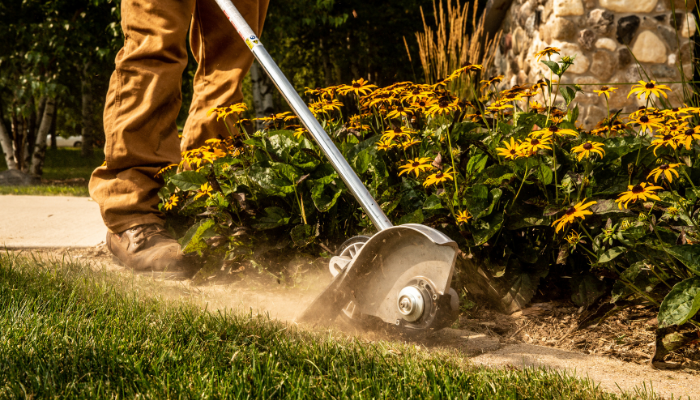
Curved edger blades incorporate raised or winged sections along the blade edge. As the blade rotates, these features help move soil and debris away from the cut, which can produce a more pronounced trench and clearer edge line compared to flat blades.
This wider cut produces more pronounced edge definition that many professionals report maintains crisp appearance longer between maintenance visits. The additional material removal along the edge creates a more distinct boundary between turf and hardscape that resists grass encroachment more effectively than narrow cuts. For operations managing properties on weekly or biweekly schedules, this extended edge life can reduce the frequency of edging passes required to maintain acceptable appearance.
The curved blade approach does present trade-offs. The raised blade sections can create slightly more resistance when cutting dense or compacted soil, though the difference is typically modest on properly powered edgers. The more complex geometry also typically commands higher replacement costs compared to simple straight blades.
.png)
Selecting Appropriate Blade Types
Always ensure replacement blades match the edger’s specified diameter, center hole size, and mounting configuration before installation. Professional operations should consider maintenance frequency when evaluating blade types. Operations maintaining properties weekly may find straight blades adequate since edges receive frequent attention before significant grass encroachment occurs. The lower blade cost and reduced power requirements support this approach for high-frequency maintenance schedules.
Conversely, operations servicing properties biweekly or less frequently may benefit from curved blades' extended edge definition. The wider cut justifies higher blade costs through reduced edging time requirements and improved edge appearance between visits. Properties where edge appearance directly affects client satisfaction particularly benefit from this approach.
Some operations maintain both blade types, deploying straight blades for frequent maintenance routes while reserving curved blades for lower-frequency properties or clients with higher appearance standards. This strategic approach optimizes blade selection to specific service contexts rather than applying universal solutions across varied situations.
Adapted from content provided by Mike from Bedell Property Management.
Mike Bedell
Bedell Property Management
2025 Member
Bio:
Mr. Bedell is a sought after green industry specialist, living and working in Southeast Michigan. He is known for his strong work ethic, thoughtful problem solving skills and "hands on" approach to project management.