U-Handle vs Loop Handle Trimmers: Choosing the Right Configuration
Professional string trimmers and brush cutters are available in two distinct handle configurations: traditional loop handles and U-style bicycle handlebars. Each design serves different applications, with the choice significantly impacting operator comfort and efficiency during extended use. Understanding the advantages and limitations of each style enables informed equipment selection matched to specific operational demands.
.png)
U-Handle Advantages: Ergonomics and Weight Distribution
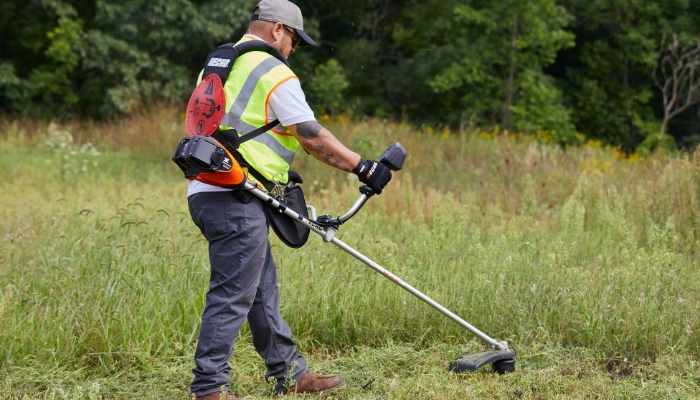
U-handle trimmers like the ECHO SRM-3020U typically include harness systems that fundamentally change how operators carry and control the equipment. Two-point harnesses distribute machine weight across the shoulders and torso rather than concentrating it in the arms and lower back. Hip pad attachments allow resting the machine's weight at the hip position, substantially reducing fatigue during extended trimming sessions.
The handlebar configuration provides superior ergonomic advantages for body positioning. Operators can pivot and turn the machine using primarily arm and shoulder movement rather than heavily engaging the lower back. While some back involvement remains inevitable, the strain reduction proves significant compared to loop handle operation. For trimming sessions exceeding 30 minutes, this ergonomic advantage becomes increasingly pronounced as accumulated fatigue sets in.
Handlebar design also enables lighter grip pressure since the harness bears the machine's weight. This seemingly minor detail carries important implications—tight gripping increases vibration transmission to hands and arms, contributing to operator fatigue and potential long-term vibration exposure issues. The ability to maintain control with lighter grip pressure reduces these effects measurably.
U-Handle Limitations: Setup Time and Maneuverability
U-handle configurations introduce practical compromises. Setup and breakdown require additional time—typically 2-3 minutes per job—for adjusting handlebar position, securing harness connections, and positioning equipment properly. While this time investment remains modest, it adds up across multiple daily stops. Operators accustomed to grabbing loop handle trimmers and immediately beginning work may find the additional setup tedious.
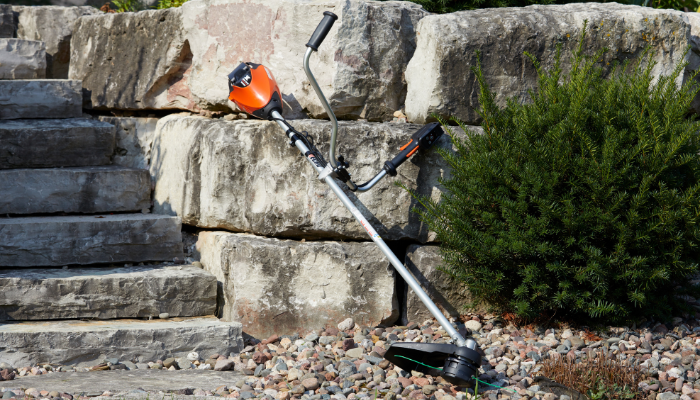
Wide handlebars create maneuverability challenges in confined spaces. Dense plantings, tight fence lines, and areas with closely spaced obstacles become difficult to navigate when handlebars extend beyond the cutting head's width. The handlebar span that provides comfortable control in open areas becomes a liability when threading through restricted spaces.
Accessing the trimmer head for clearing tangles or reloading line presents another practical inconvenience. Operators must shut down the machine, disconnect from the harness, lower the equipment to the ground, and then service the head. On jobs requiring frequent line additions or regular head clearing, this repeated disconnect-reconnect cycle becomes frustrating compared to the immediate access provided by loop handle designs.
.png)
Ditch and Slope Operation
Contrary to common assumptions, U-handle trimmers can work effectively on ditches and slopes when operators position themselves correctly. Standing at ditch bottom rather than on the side slope allows comfortable handlebar operation. However, this requires thoughtful positioning and may not suit all terrain configurations encountered in commercial work.
Application-Specific Recommendations
Loop handle trimmers remain optimal for standard weekly maintenance operations where versatility, quick deployment, and maneuverability matter most. Properties with extensive trimming around obstacles, frequent equipment transitions between tasks, and varied terrain conditions favor traditional loop handle designs.
U-handle configurations excel in specific applications: brush clearing operations, overgrown property remediation, extended trimming sessions exceeding 30-60 minutes, and large open areas where maneuverability around obstacles isn't a primary concern. The ergonomic advantages justify the setup time and maneuverability compromises when work demands extended continuous operation.
Fleet Considerations for Professional Operations
Commercial landscape operations benefit from maintaining both handle styles within their equipment inventories. Standard weekly maintenance routes utilize loop handle trimmers for efficiency and versatility, while U-handle units deploy for specialized brush-cutting contracts, large property clearings, and restoration projects requiring extended trimming duration. This targeted approach maximizes each design's strengths while minimizing exposure to their respective limitations.
Understanding that handle style significantly affects operator comfort and work efficiency enables strategic equipment selection that matches specific job requirements rather than attempting to force one configuration to serve all applications.
Adapted from content provided by Bradley Behr.
Bradley Behr