How to Quote Lawn Mowing
Establishing profitable, consistent pricing for lawn mowing services challenges new landscape operations and remains an ongoing refinement process for established businesses. Understanding multiple pricing methodologies enables operations to select approaches matching their market positioning, service area demographics, and operational efficiency. The following strategies provide frameworks for how to quote a yard for mowing systematically rather than through inconsistent estimation.
Acreage-Based Pricing Formula
A straightforward lawn mowing pricing formula bases quotes directly on total property acreage, providing mathematical consistency across the customer base. This method eliminates subjective estimation variability while enabling rapid quote generation without site visits for most properties.
.png)
Basic Formula Structure
Price = 100 × Total Acreage Minimum Price: $35
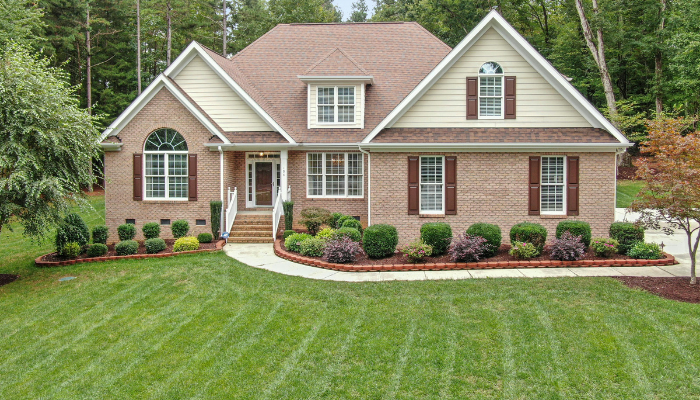
This formula generates quotes by multiplying property acreage by 100. For example, a 0.46-acre property calculates as 100 × 0.46 = $46 per mowing. Properties below the minimum threshold (0.35 acres in this example) default to the $35 minimum, ensuring small properties generate adequate revenue to justify service.
Operations preferring round numbers can adjust quotes to $5 increments—the 0.46-acre property quoted at $46 could round to $45 for cleaner invoicing and customer communication.
Practical Application
The formula's simplicity enables quick mental calculations. A 0.35-acre property quotes at $35, a 0.54-acre property at $54, and so forth—essentially moving decimal points to generate quotes. This speed proves valuable when responding to phone inquiries or generating multiple quotes during business development campaigns.
Remote Property Assessment
This pricing method often eliminates property visit requirements. Accurate acreage determination occurs through multiple resources including online property measurement tools, real estate listing sites displaying lot sizes, and county assessor records where available. Properties listed in square footage convert to acres through simple calculation (divide square footage by 43,560) or online conversion tools.
This remote assessment capability substantially reduces the time investment per quote, enabling operations to respond to more inquiries efficiently. However, site-unseen quoting requires verification during first service to confirm no unusual conditions affect actual service time.
Add-On Cost Adjustments
Base acreage pricing provides the foundation, but property-specific factors warrant adjustments ensuring quotes reflect actual service complexity and time requirements. Systematic add-on structures prevent underpricing properties with characteristics increasing labor time.
Common Add-On Adjustments
Corner lots: +$5-10 – Additional street frontage requires extra trimming and edging along multiple property edges
Gated access: +$5 – Small gates requiring equipment disassembly and reassembly add handling time
Steep slopes: +$5-15 – Hills requiring slower mowing speeds, additional safety precautions, or specialized equipment warrant graduated pricing based on severity
Service frequency: +$10 for bi-weekly schedules – Less frequent service allows more growth between cuts, increasing mowing time and clipping volume
Difficult clients: +$10 – Properties with historically demanding clients or frequent complaints justify premium pricing reflecting additional communication and service time
These adjustments customize base formula pricing to property realities, maintaining profitability across varied service conditions. Operations should develop their own add-on lists based on local conditions and factors affecting their specific operational efficiency.
Formula Limitations and Modifications
The acreage-based approach demonstrates decreasing effectiveness above half-acre properties in many markets. Customer acceptance rates decline as prices exceed certain thresholds—properties quoted at $75-100+ frequently reject quotes or negotiate aggressively. This resistance reflects market rate expectations and competitive pressures in larger property segments.
Operations serving substantial acreage should modify the multiplier for properties exceeding 0.5 acres. For example, using 100× for properties below 0.5 acres but reducing to 75× or 80× for larger properties maintains competitiveness while preserving profitability. The specific adjustment depends on local market conditions, equipment efficiency, and operational costs.
Alternative Pricing Methodologies
While acreage-based pricing provides systematic consistency, alternative approaches suit different operational models and market conditions.
Hourly Rate Pricing
Time-based pricing charges clients based on actual service duration, providing transparent billing where larger jobs generate proportionally higher revenue. This straightforward model ensures profitability across varied property types and conditions.
However, hourly pricing requires careful cost calculation including drive time, equipment setup and cleanup, and actual mowing duration. Efficient operations paradoxically earn less per property as they improve speed—faster service completion reduces billable hours despite unchanged operational costs. This inverse relationship between efficiency and revenue can discourage productivity improvements.
Hourly pricing also creates uncertainty for clients unfamiliar with service duration, potentially creating resistance compared to fixed-price competitors offering predictable costs.
.png)
Square Footage Pricing
Pricing by lawn square footage parallels acreage-based approaches but uses finer measurement units. Operations determine their average mowing rate per 1,000 square feet, then multiply property square footage by this rate.
For example, if equipment and crew efficiency enables mowing 1,000 square feet in 2 minutes, and target revenue is $60/hour ($1 per minute), the rate becomes $2 per 1,000 square feet. A 15,000 square foot lawn quotes at $30.
This method requires accurate productivity tracking to establish realistic per-square-foot rates reflecting actual operational costs and desired profit margins.
Tiered Flat-Rate Pricing
Flat-rate tier systems group properties into size brackets, each carrying predetermined pricing regardless of exact dimensions within that bracket. Example structure:
Properties under 10,000 sq ft: $40
Properties 10,000-20,000 sq ft: $65
Properties 20,000-30,000 sq ft: $90
Properties 30,000-50,000 sq ft: $125
This approach simplifies quoting while providing client pricing predictability. Customers appreciate knowing their exact cost upfront. Operations benefit from consistent pricing without per-property calculations.
The disadvantage involves revenue loss on properties at the lower end of each bracket—a 10,500 square foot property generates the same revenue as a 19,500 square foot property despite substantially different service times. Careful bracket definition and pricing mitigates this issue.
Strategic Pricing Considerations
Regardless of methodology selected, sustainable pricing must cover all operational costs including equipment depreciation and replacement, fuel and maintenance, insurance, labor including payroll taxes and benefits, vehicle costs, and desired profit margin. Many operations underestimate true costs by failing to account for equipment replacement reserves and administrative time.
Market research provides essential context. Survey competitors' pricing through mystery shopping or market analysis. However, avoid simply matching lowest competitors—profitable operations price based on their value delivery and cost structure rather than racing to the bottom.
Consider offering service packages bundling mowing with trimming, edging, and blowing for premium pricing compared to mowing-only rates. Many customers prefer comprehensive service over piecemeal pricing.
Implementation and Refinement
New operations should implement chosen pricing methods systematically, tracking quote acceptance rates and actual service times versus quoted prices. This data reveals whether pricing accurately reflects service requirements or requires adjustment. Regular refinement based on operational experience ensures pricing remains both competitive and profitable as the business evolves.
Testing price adjustments on new customers before applying broadly to existing clients minimizes revenue disruption if modifications prove unsuccessful. Existing customers represent stable revenue; testing on new acquisition avoids risking established relationships.
Professional lawn mowing pricing balances market competitiveness with operational profitability. Systematic formulas provide consistency and efficiency, but ultimately pricing must reflect actual costs and market conditions in specific service areas.
Adapted from content provided by Randy.
Randy Dulin