Best Trimmer Racks for Professional Lawn Equipment: Comparing Mount Designs
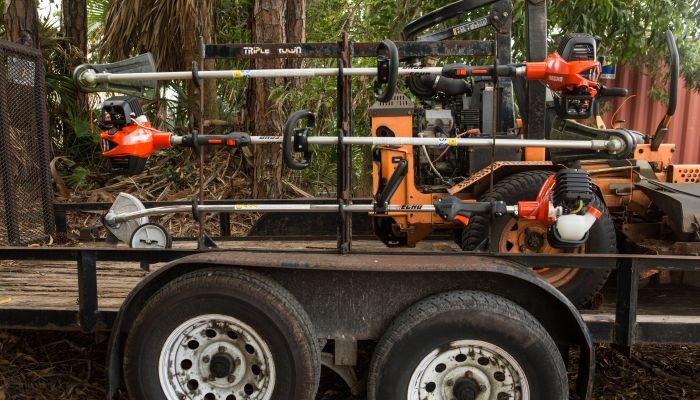
Trimmer racks mounted directly to mower ROPS bars improve operational efficiency by eliminating repeated trips to the trailer or truck for string trimmers. For solo operators managing high daily property counts and crews coordinating equipment across multiple operators, time savings of even 30-60 seconds per property compound significantly across dozens of weekly stops. Understanding the design differences between available trimmer rack systems helps professionals select solutions delivering reliable function without excessive complexity.
Efficiency Impact for Commercial Operations
Professional landscape operations benefit from trimmer racks through multiple efficiency mechanisms. Mounting trimmers directly on mowers eliminates walking between mower and trailer to retrieve trimmers for edging, obstacle trimming, or detail work. This seemingly minor convenience accumulates substantial time savings—a solo operator running 30 properties weekly saves 15-30 minutes daily through eliminated retrieval trips. Multiplied across work weeks and seasons, this efficiency gain translates to additional billable work capacity without extending work hours.
Crew operations gain similar advantages when multiple operators share mowers and trimmers throughout properties. Having trimmers mounted and immediately accessible reduces coordination delays and keeps workflow moving efficiently.
Design Philosophy: Complex vs. Simple Mounting Systems
The trimmer rack market presents two distinct design philosophies: complex multi-component systems and simplified direct-mount approaches. Understanding these design differences clarifies which approach suits specific operational needs and maintenance preferences.
Multi-Component Bracket Systems
Complex trimmer rack designs employ multiple brackets, adjustment mechanisms, and connection points. A typical complex system includes ROPS mounting brackets requiring separate U-bolts for attachment, intermediate mounting plates connecting these brackets to the trimmer retention mechanism, adjustable angle assemblies enabling tilt positioning, and rubber retention clips that secure trimmer handles and motor housings.
Assembly of these systems involves connecting four or more separate components, adjusting multiple connection points to achieve desired positioning, and fine-tuning retention clip placement for specific trimmer models. Installation time typically runs 60-90 minutes including adjustment and positioning optimization.
U-Bolt Compatibility Challenges
Multi-component systems often include 2-inch U-bolts for ROPS attachment. However, many commercial mower ROPS bars exceed 2-inch diameter—particularly on zero-turn models from major manufacturers. Instructions typically direct operators to source appropriately sized U-bolts locally when included hardware doesn't fit.
This creates practical problems during peak season installations. Finding U-bolts matching both the ROPS bar diameter and the threading pattern required by mounting brackets isn't guaranteed at typical hardware retailers. Operators may visit multiple stores seeking compatible hardware, consuming time better spent on billable work.
Additionally, standard U-bolt design uses rounded profiles while ROPS bars typically feature square or rectangular cross-sections. This geometry mismatch creates less secure mounting compared to square U-bolts that match ROPS bar shapes.
Component Durability Concerns
Complex systems relying on rubber retention clips face wear issues. The clips securing trimmer handles experience stress during each insertion and removal cycle. Field reports indicate these rubber components tear or deform relatively quickly—sometimes within the first few uses. Replacement parts require ordering and shipping delays, potentially leaving racks non-functional during peak work periods.
Simplified Four-Component Direct-Mount Systems
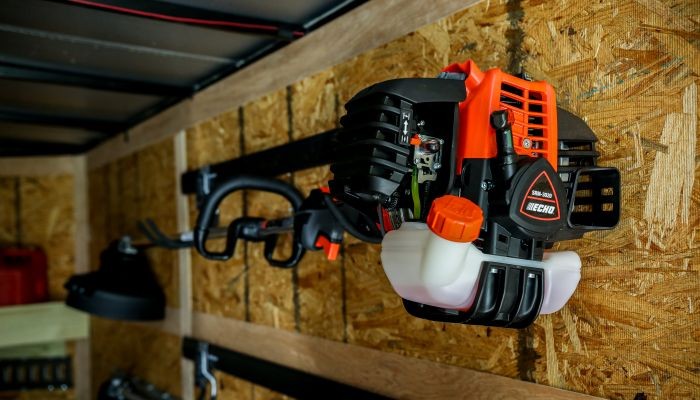
Alternative design approaches minimize complexity through streamlined mounting mechanisms. Advanced single trimmer rack designs reduce the entire assembly to four components: the main retention body that mounts directly to ROPS bars, square U-bolts in both 2-inch and 3-inch sizes addressing varied ROPS dimensions, mounting hardware, and protective padding preventing ROPS bar finish damage.
Installation requires eight bolts total and completes in approximately 15 minutes. The simplified design eliminates intermediate brackets, adjustment assemblies, and complex positioning mechanisms. Trimmers insert directly into the retention body with secure, tool-free engagement.
Key Design Features Comparison
Mounting Hardware Quality
Superior string trimmer racks include mounting hardware matching ROPS bar geometry and size variation. Providing both 2-inch and 3-inch square U-bolts eliminates sourcing delays and ensures secure attachment regardless of mower model. Square U-bolt profiles match ROPS bar shapes, distributing clamping force evenly and preventing rotation under load.
Protective padding between rack and ROPS bar preserves finish integrity, preventing paint damage from vibration and metal-to-metal contact during transport and operation.
Retention Mechanism Design
Effective weed wacker rack retention systems balance security with access speed. Rubber clip systems that require precise positioning during insertion slow workflow, particularly when operators repeat the process 20-30 times daily. More efficient designs enable single-motion trimmer insertion without requiring clip manipulation or careful alignment.
Replacement part availability matters substantially for commercial operations. Components prone to wear should either demonstrate exceptional durability or include spare parts with initial purchase. Waiting days or weeks for replacement clips creates operational disruptions during peak season.;
Motor Support Configuration
Quality lawn equipment racks incorporate motor housing support preventing trimmer weight from stressing handle retention points. Adjustable motor supports accommodate varied trimmer lengths and models, maintaining secure mounting across diverse equipment. This feature proves particularly important when operations run multiple trimmer brands or models requiring different support positioning.
Structural Stability
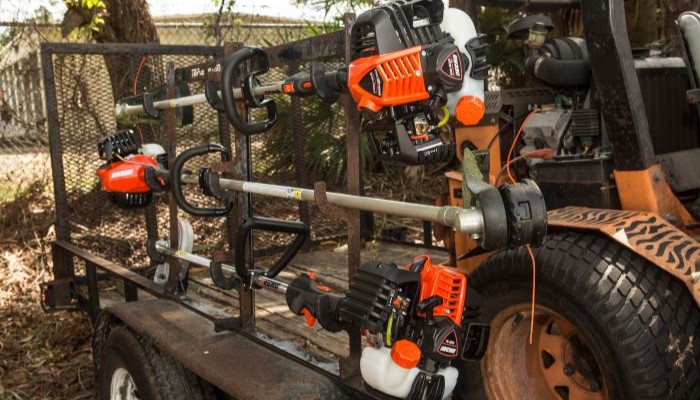
Mounted trimmers experience continuous vibration during mower operation and transport. Excessive movement indicates inadequate structural design—the rack should hold trimmers firmly enough to prevent bouncing or rolling during normal operation. While some movement remains inevitable given trimmer weight and mower vibration, quality racks minimize this substantially compared to loosely secured designs.
Price and Value Considerations
Best trimmer rack for open trailer or mower-mount applications typically price between $120-140 including shipping. At similar price points, value differentiation occurs through installation efficiency, hardware completeness, component durability, and long-term reliability rather than cost savings.
Investing in racks requiring extensive installation time, hardware sourcing, and frequent component replacement ultimately costs more through lost productivity than initially higher-quality designs that install quickly and operate reliably.
Selection Recommendations for Professional Operations
Professional landscape operations should prioritize trimmer racks demonstrating:
Installation efficiency: Complete hardware enabling 15-20 minute installation without requiring additional parts sourcing Hardware quality: Square U-bolts in multiple sizes matching common ROPS dimensions Retention design: Secure trimmer holding without complex insertion procedures Durability: Robust construction minimizing wear-prone components Included spares: Critical wear components included for field replacement
Operations running multiple mowers benefit from standardizing on single rack designs, simplifying inventory, training, and maintenance across equipment fleets.
The time investment in researching and selecting quality trimmer rack designs delivers returns through installation efficiency, operational reliability, and reduced maintenance demands throughout equipment service life. For professional operations where time directly correlates with revenue, these factors outweigh minor initial cost differences between competing designs.
Adapted from content provided by Nick from P & H Lawn Care.
Nick Phillips
P & H Lawn Care
2025 Member
Bio:
Nick Phillips is the owner of P&H Lawn Care, which provides landscaping and lawn care services in Tennessee.