Pruning Shears Safety Precautions & Maintenance
Hand pruning tools including pruning shears, loppers, and pruning saws enable efficient spring maintenance across commercial and residential properties. Despite their essential role in landscape operations, these implements cause approximately 27,000 annual hospital visits according to U.S. Consumer Product Safety Commission data. The familiarity of these everyday tools paradoxically increases injury risk—routine use breeds complacency regarding proper handling and maintenance, creating preventable hazards.
Federal OSHA identifies cuts and hand injuries as primary hazards in lawn and landscape maintenance work. The agency's Office of Statistical Analysis reports cuts, lacerations, and punctures account for 17 percent of landscape industry injuries annually, representing the second most common injury category. Understanding pruning shears safety precautions and implementing systematic preventive maintenance substantially reduces these injury rates.
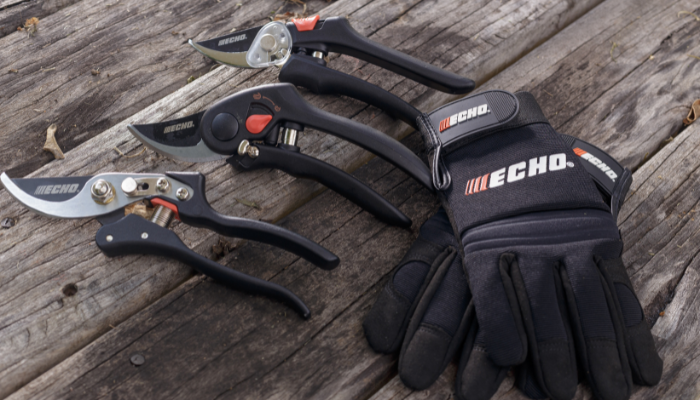
Tool Selection and Ergonomic Considerations
Professional operations should prioritize ergonomic design when purchasing pruning tools and equipment. Tools fitting operators' hands comfortably with cushioned grips reduce fatigue and improve control during extended use. Lightweight construction minimizes cumulative stress on hands, wrists, and arms throughout workdays involving repetitive cutting motions. Avoid tools requiring awkward body positions or excessive wrist deviation during normal use—these design shortcomings accelerate fatigue and increase injury risk.
Federal OSHA regulations at 29 CFR 1926.951 establish employer responsibility for maintaining hand tools in safe condition. This includes ensuring tools remain sharp, properly adjusted, and free from defects that could cause injury.
Matching Tools to Tasks
Proper tool selection prevents both plant damage and operator injury. Hand pruners or pruning shears handle stems up to approximately finger thickness—generally under 1/2 inch diameter. Forcing hand pruners through larger material damages blades while requiring excessive grip force that strains hands and wrists.
Loppers address thumb-sized branches, typically 1/2 to 1-1/2 inches depending on lopper size and condition. The extended handles provide mechanical advantage enabling clean cuts through material that would defeat hand pruners. Pruning saws become necessary for branches exceeding lopper capacity, generally above 1-1/2 inches diameter. Attempting to force undersized tools through oversized material represents a primary cause of tool damage and operator injury.
Pre-Use Inspection Requirements
Daily tool inspection before field deployment identifies hazards requiring correction. Operators should verify blade sharpness—dull blades require excessive cutting pressure that fatigues operators and increases slip potential when tools finally break through material. Dull cutting surfaces also tear plant tissue rather than shearing cleanly, creating ragged wounds that invite disease.
Check all pivot points, ensuring joints move freely without excessive play or binding. Lubricate moving parts according to manufacturer specifications. Verify fasteners remain tight—loose bolts allow blade misalignment and unstable cutting action. Examine tools for visible damage including cracked handles, bent blades, or metal fatigue indicators. Any tool exhibiting defects should be tagged "Do Not Use" and removed from service immediately pending repair or replacement.
Personal Protective Equipment
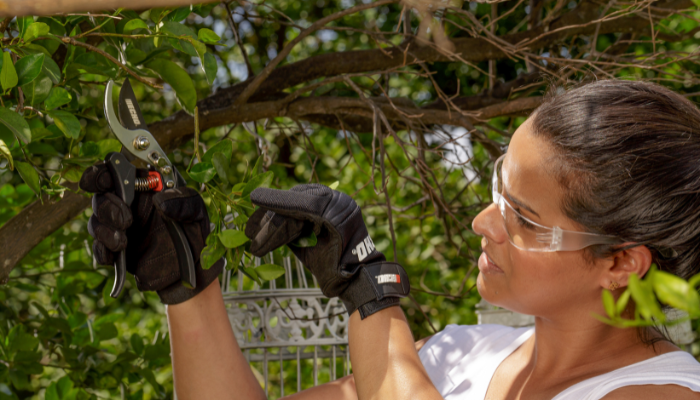
Appropriate PPE for pruning operations includes safety glasses with side shields or full face shields protecting against flying debris and spring-back branches. Sturdy work boots provide stable footing on uneven terrain while protecting feet from falling branches and tool drops. Hard hats guard against overhead hazards during tree work. Gloves protect hands from abrasions, though specialized cut-resistant gloves or metal-mesh gloves provide superior protection against lacerations during intensive pruning sessions. Long sleeves and pants protect skin from scratches and reduce exposure to plant irritants and insects.
.png)
Safe Operating Practices
Secure footing and balance form the foundation of safe pruning work. Never prune from unstable positions requiring awkward reaches or body contortions. Reposition as needed to maintain comfortable working angles that minimize wrist bending and excessive reaching.
Maintain awareness of hand and finger positions before initiating cuts. The cutting motion should always direct away from the body and other workers. Grip tools firmly to prevent slipping during cutting strokes. Let sharp blades perform the work rather than forcing cuts through excessive pressure—if material resists cutting, sharpen or adjust blades rather than increasing force.
Alert nearby workers verbally before branches fall, particularly when pruning overhead. Maintain safe working distances from other crew members to prevent contact injuries from tools or falling material.
Electrical Hazard Management
Pole pruner operations near electrical infrastructure require strict adherence to minimum approach distances. OSHA regulation 29 CFR 1910.268(q)(2)(iv) establishes specific clearance requirements based on voltage. For voltages up to 50kV, maintain minimum 10-foot clearance. Higher voltage lines require greater distances.
All tree trimming within 10 feet of energized lines must be performed exclusively by trained, qualified line-clearance tree trimmers. When work within minimum approach distances becomes unavoidable, contact the utility company to arrange de-energizing, grounding, or insulating the conductors before work proceeds. Never use metal pole pruners near electrical lines—fiberglass or other non-conductive materials are mandatory for this work.
Ergonomic Injury Prevention
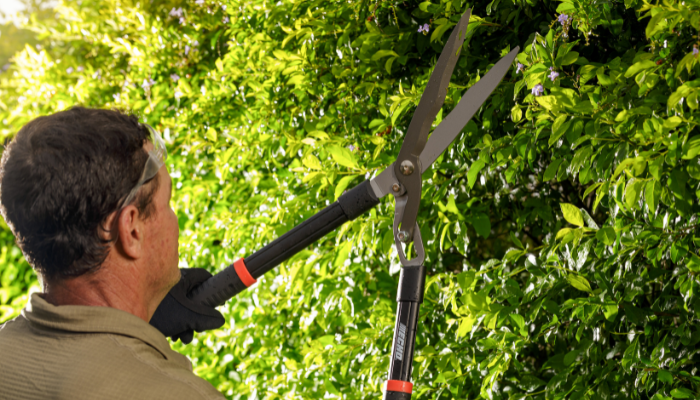
Repetitive pruning motions strain hands, wrists, arms, and shoulders, potentially causing cumulative trauma disorders. Implement job rotation enabling workers to alternate between pruning and other tasks throughout workdays. Encourage micro-breaks—20 to 30-second pauses every 15 minutes where workers cease cutting motions and perform simple stretches. These brief interruptions significantly reduce repetitive stress injury risk without substantially impacting productivity.
Vary body positions and hand placements during extended pruning sessions to distribute stress across different muscle groups and joint angles. Tool belts should carry only essential implements—overloaded belts strain lower back and hips unnecessarily.
.png)
Preventive Maintenance to be Performed of Pruning Shears
Systematic maintenance extends tool life while ensuring safe operation. At workday conclusion, wipe cutting surfaces clean with dry cloths, removing sap and debris. Apply light lubricant to pivot points and springs. How to sharpen loppers and pruners follows manufacturer specifications, typically involving flat files or sharpening stones applied to maintain original bevel angles. Avoid over-sharpening that creates thin, fragile edges prone to chipping.
Disinfect blades between plants when disease presence is suspected, preventing pathogen transmission. A 10% bleach solution or commercial disinfectant applied and allowed proper contact time provides effective sanitation.
Store tools in clean, dry locations protecting them from weather exposure and preventing rust development. Hanging storage prevents cutting edge damage from contact with other tools or surfaces.
Training and Hazard Recognition
Workers must receive comprehensive training on each pruning tool they'll operate, including proper use techniques, hazard recognition, and safety procedures. Training should address manufacturer-specific operational guidelines and safety features. Operators should feel comfortable with training content before using tools independently—uncertainty indicates additional instruction is needed.
Before beginning pruning work, inspect the immediate area for hazards including active insect nests, animal presence, unstable footing, and overhead hazards. Address identified hazards before commencing cutting operations.
Systematic implementation of these safety practices, combined with quality tool selection and preventive maintenance programs, substantially reduces pruning-related injuries while extending equipment service life and maintaining crew productivity throughout demanding spring pruning seasons.
Adapted from content provided by NALP.
NALP