Piston vs Diaphragm Pump Sprayers: Professional Selection Guide for ECHO Equipment
Professional landscape operations require reliable chemical application equipment for herbicide, pesticide, fertilizer, and cleaning applications. ECHO sprayers employ two distinct pump technologies—piston and diaphragm designs—each offering specific advantages for different chemical types and application scenarios. Understanding the mechanical differences and appropriate use cases for each pump style enables informed equipment selection matching operational demands.
Piston Pump Technology: The Industry Standard
Piston pump sprayers represent the most common backpack sprayer design in professional use. The ECHO MS-5010BP exemplifies this technology, utilizing a piston-and-cylinder mechanism analogous to internal combustion engine operation. Each pump handle stroke drives the piston through the cylinder, compressing air and building pressure within the tank. This pressurization forces chemical solution through the delivery system and out the spray wand.

Piston Pump Operating Characteristics
The piston-cylinder interface creates an effective seal through precision-machined surfaces and O-ring gaskets. This tight mechanical tolerance enables efficient pressure generation—fewer pump strokes produce higher working pressure compared to alternative pump designs. Operators appreciate the reduced pumping effort required to achieve and maintain spray pressure throughout applications.
This efficiency advantage translates to reduced operator fatigue during extended spraying sessions. Professional crews applying herbicides across multiple properties or treating large acreage benefit substantially from piston pumps' superior pressure-building characteristics and sustained performance between repressurization cycles.
Piston Pump Maintenance Considerations
The precision piston-cylinder interface requires clean liquid chemicals to maintain longevity. Dirt, grit, or undissolved particles introduced between piston and cylinder surfaces cause accelerated wear similar to contamination damage in engines. This wear gradually reduces sealing effectiveness, decreasing pressure output and requiring more frequent pumping to maintain spray pattern quality.
Over time, O-rings and seals within piston assemblies wear and require replacement. This represents routine maintenance rather than design failure—replacement seal kits enable extending sprayer service life substantially. The maintenance procedure remains straightforward for operations with basic mechanical aptitude, making seal replacement a viable in-house service task.
Ideal Applications for Piston Pump Sprayers
Piston pump sprayers excel when applying liquid chemical formulations including standard herbicides, liquid fertilizers, insecticides, and fungicides mixed from liquid concentrates. These solutions remain free of particulate matter that could damage precision pump components. For general-purpose landscape chemical application, piston pump sprayer technology provides optimal performance, efficiency, and longevity.
The MS-5010BP's five-gallon capacity suits most professional applications, providing adequate solution volume for typical property treatments while maintaining manageable weight for extended carrying. Smaller operations or applications requiring reduced capacity benefit from four-gallon models like the MS-4010BP, offering identical piston pump technology in more compact configuration.
Diaphragm Pump Technology: Specialized Capability
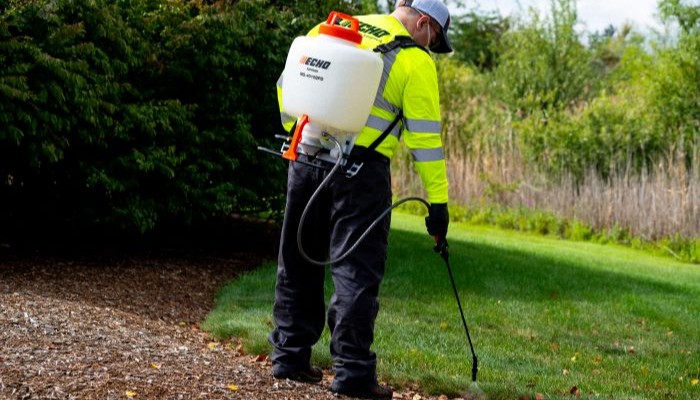
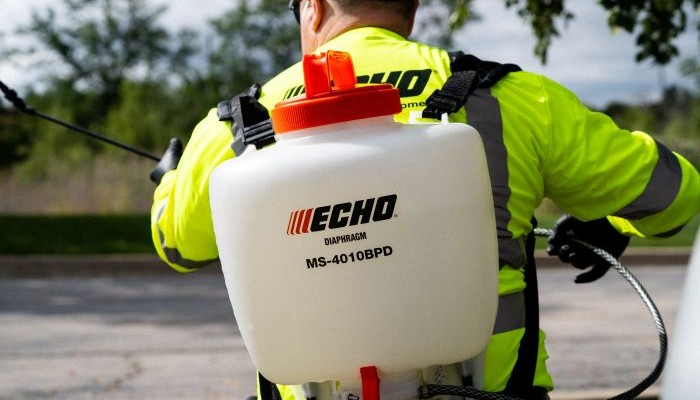
Diaphragm pump sprayers employ fundamentally different pressure generation mechanisms. Rather than piston-cylinder compression, these pumps utilize flexible diaphragm movement to displace fluid and create pressure. The ECHO MS-4010BPD (the "D" designates diaphragm) demonstrates this alternative approach, available in four-gallon capacity.
Diaphragm Pump Operating Principles
Diaphragm pumps separate the pumping mechanism from the chemical solution through flexible membrane barriers. Pump handle actuation flexes the diaphragm, creating pressure differential that draws solution into the pump chamber during one stroke phase and forces it toward the delivery system during the opposing phase. This isolated chamber design prevents chemical contact with precision mechanical surfaces.
Performance Characteristics
The diaphragm vs piston pump comparison reveals distinct performance differences. Diaphragm pumps typically require more frequent pumping to achieve equivalent spray pressure compared to piston designs. Each pump stroke displaces less volume, necessitating additional strokes to build working pressure. For applications requiring sustained high pressure or continuous spraying, operators may find the increased pumping frequency fatiguing compared to piston alternatives.
However, this modest efficiency compromise delivers significant capability advantages in specific applications that justify the trade-off for operations regularly encountering those scenarios.
Diaphragm Pump Advantages: Particle Tolerance
The critical advantage of diaphragm technology lies in particle tolerance. Chemical formulations containing wettable powders, dissolvable granules, or crystalline materials that don't fully dissolve create gritty solutions. These particles would rapidly wear piston-cylinder interfaces in piston pumps, causing premature seal failure and reduced performance.
Diaphragm pumps handle these solutions without degradation. The flexible diaphragm tolerates particle passage without suffering abrasive wear that affects piston systems. Operations regularly applying wettable powder herbicides, granular fertilizer solutions, or specialty chemicals with particulate content benefit substantially from diaphragm pump durability in these demanding applications.
Maintenance Profile
Diaphragm pumps eliminate piston-cylinder wear concerns and associated seal replacement requirements. The diaphragm itself represents a wear component requiring eventual replacement, but service intervals typically exceed piston seal longevity when operating with particle-containing solutions. For clean liquid chemical applications, both pump types deliver comparable maintenance demands.
Chemical-Specific Selection Guidance
Liquid Herbicides and Pesticides
Standard liquid herbicide and pesticide concentrates mixed with water create clean solutions ideal for piston pump sprayers. The superior pressure generation efficiency and reduced pumping effort make piston pumps the preferred choice for these common applications. Operations primarily applying glyphosate, selective herbicides, insecticides, and liquid fungicides should select piston pump technology.
Wettable Powders and Granular Formulations
Chemical products labeled as wettable powders, water-dispersible granules, or requiring dissolution of solid materials necessitate diaphragm pump consideration. Even thorough mixing may leave microscopic particles suspended in solution. While invisible, these particles accelerate piston pump wear. Diaphragm pumps handle these formulations without compromise, protecting equipment investment when applying these chemical types regularly.
Bleach-Based Cleaning Solutions
House and siding cleaning applications sometimes employ bleach-containing solutions. The corrosive nature of chlorine bleach damages diaphragm pump components more rapidly than piston assemblies. Operations offering pressure washing or building cleaning services should dedicate piston pump sprayers to bleach-based applications while reserving diaphragm units for agricultural and landscape chemicals only.
Pricing and Capacity Considerations
ECHO sprayers maintain competitive pricing across both pump technologies. Piston and diaphragm models typically price within $5-10 of each other at comparable capacities, making selection based on application requirements rather than budget constraints. The modest premium for diaphragm technology reflects more complex pump mechanisms but doesn't create significant purchasing barriers.
Capacity selection follows application patterns. Five-gallon units suit operations treating larger properties or requiring extended work between refills. Four-gallon models reduce carrying weight for applications on smaller properties or when treating limited areas. The ECHO 3 gallon sprayer options provide even greater portability for spot treatment applications or operations prioritizing minimal weight over capacity.
Strategic Equipment Planning
Professional landscape operations benefit from maintaining both pump technologies within equipment inventories. Piston pump sprayers serve as primary applicators for standard liquid chemical programs, while diaphragm units deploy for specialty applications involving wettable powders or granular formulations. This targeted approach optimizes each technology's strengths while protecting equipment from premature wear caused by misapplication.
Understanding piston vs diaphragm pump distinctions enables informed equipment purchasing that matches specific operational chemical application requirements, maximizing equipment longevity and performance across diverse professional landscape maintenance demands.
Adapted from content provided by Mark from Mark Thomas Builder.
Mark Thomas
Mark Thomas Builder
2025 Member
Bio:
Mark Thomas is a home builder and tool expert. He provides regular tips and tricks to help future home builders get the knowledge they need.