Professional Two-Saw Chainsaw Strategy
Professional tree work and forestry operations benefit substantially from deploying multiple chainsaws matched to specific tasks rather than forcing a single saw to handle all cutting demands. Understanding how lightweight limbing saws and heavy-duty felling saws complement each other enables more efficient workflow while reducing operator fatigue during extended projects.
Two-Stage Approach: Strategic Equipment Pairing
Tree removal and processing involves distinctly different cutting requirements. Felling large trees and bucking substantial trunk sections demand power and bar length. Conversely, limbing branches and processing smaller material requires maneuverability and reduced weight. Using appropriate equipment for each task improves both efficiency and operator comfort throughout multi-hour projects.
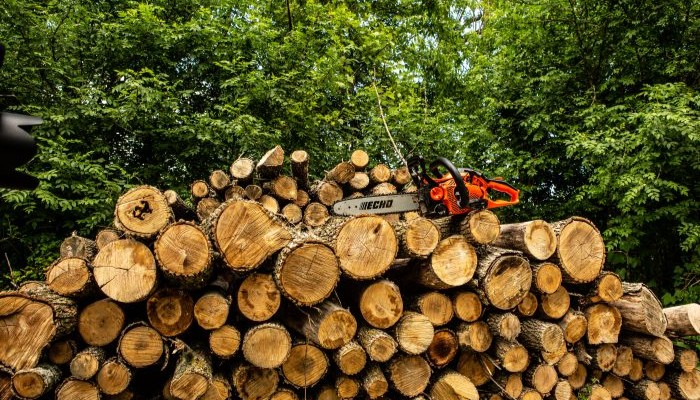
The strategic pairing combines a lightweight rear-handle saw for limbing work with a larger displacement saw equipped for heavy cutting. This approach also provides critical backup capability—if the primary saw binds in a cut or experiences mechanical issues, the second saw enables relief cuts or continuation of work rather than halting operations entirely.
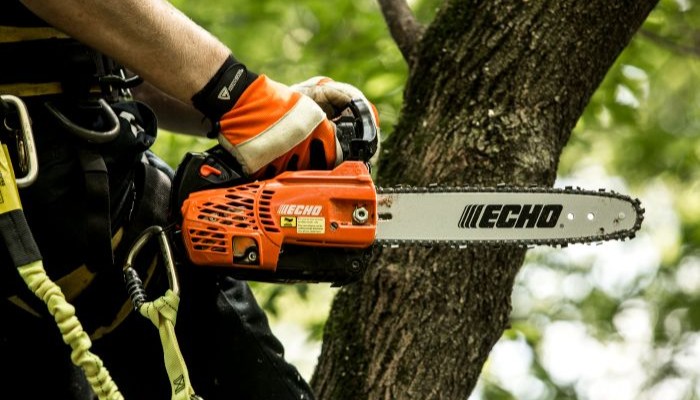
Lightweight Limbing Saw: ECHO CS-2511PN
The CS-2511PN rear-handle chainsaw serves as an ideal limbing saw, offering professional power in a compact package. Available with either 12-inch or 14-inch bars, the saw weighs approximately 7.7 pounds when fueled with a 14-inch bar installed. This weight category delivers meaningful fatigue reduction compared to larger saws during extended limbing sessions.
The 14-inch bar configuration provides versatile cutting capacity. While primarily deployed for limbing downed trees, this bar length handles small to medium tree felling and processes wood up to the full bar length. When working through branches at varied heights and angles—reaching overhead, cutting at ground level, or maneuvering around irregular branch configurations—the reduced weight becomes increasingly valuable as work hours accumulate.
Nano Chainsaw Performance
The PN designation indicates nano chain compatibility—a narrower kerf chain that removes less material per cut while maintaining cutting speed. This design delivers faster, smoother cuts with reduced power requirements compared to standard chain. The efficiency advantage proves particularly noticeable in smaller displacement saws where every performance gain matters. Operators consistently report improved cutting feel and reduced vibration with nano chain configurations.
Rear Handle vs. Top Handle Considerations
While the CS-2511TN top-handle model offers similar displacement and cutting capacity with a 12-inch bar, the rear-handle CS-2511PN configuration suits ground-based forestry work better. Top-handle saws excel in aerial tree work where compact size and one-handed operation prove essential, but ground operations benefit from the superior control and balance of rear-handle designs. The slightly longer 14-inch bar on the rear-handle model extends versatility without significantly impacting weight or maneuverability.
Heavy-Duty Bucking Saw: ECHO CS-620PW
The CS-620PW provides the power and bar capacity necessary for felling larger trees and bucking substantial trunk sections. The "W" designation indicates full wrap-handle configuration—a handlebar that wraps around the saw body enabling comfortable grip positions from multiple angles. This feature proves valuable when working around large logs where approach angles vary or when cutting from unconventional positions.
Bar Length Versatility
The CS-620PW accommodates bars from 16 to 27 inches, allowing operators to match bar length to typical work demands. A 20-inch bar serves as an effective general-purpose configuration, handling most tree removal and firewood processing while remaining manageable for regular use. The 27-inch capacity provides options for occasional large tree work without requiring a dedicated heavy-displacement saw.
Longer bars enable cutting through substantial wood in single passes, improving efficiency on large-diameter material. However, extended bars add weight and reduce maneuverability—operators should match bar length to actual needs rather than maximizing length unnecessarily.
Compression Relief and Starting
The CSG-7410 serves hardscape contractors, paver installers, concrete cutting specialists, and landscape construction professionals requiring reliable concrete cutting capabilities. The feature set addresses real operational needs rather than adding complexity, delivering practical advantages that improve workflow efficiency and reduce equipment-related frustrations during demanding projects.
Captive Bar Nuts Consideration
The CS-620PW uses standard bar nuts that completely separate from the saw during bar maintenance or chain adjustments. These nuts can drop into leaf litter, brush, or uneven ground where they're difficult to locate. Many newer ECHO models incorporate captive bar nuts that remain attached to the saw cover even when fully loosened, preventing loss. Operators using saws with standard nuts should carry spare bar nuts as insurance against field losses that would otherwise halt operations.
Practical Two-Saw Workflow
Effective two-saw deployment follows task-specific logic. After felling a tree, limbing proceeds with the lightweight saw—operators move efficiently around the downed tree, removing branches at various heights and angles without the fatigue of carrying unnecessary weight. The small saw's maneuverability enables quick, accurate cuts on irregular branch configurations.
Bucking trunk sections into manageable lengths employs the larger saw and longer bar. The power and bar capacity handle substantial wood efficiently while the full wrap handle accommodates varied cutting positions around large logs.
Managing Pinched Bars
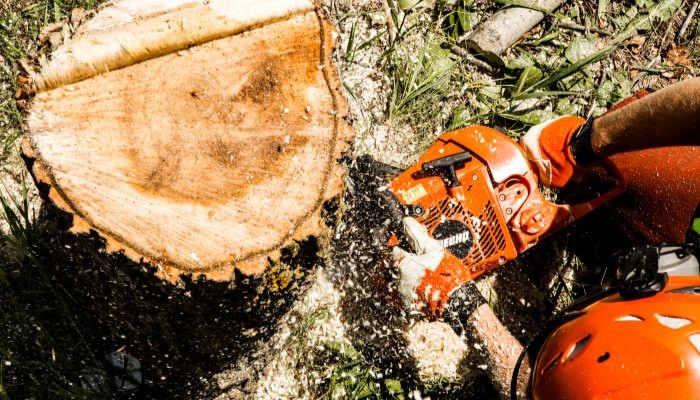
Bucking logs creates frequent bar-pinching situations as cut sections settle or roll during cutting. Having a second saw available enables cutting relief kerfs that release pressure and free the pinched bar. Without backup equipment, extracting a pinched saw requires removing the bar—a time-consuming process that may require specialized tools. Strategic wedge placement during bucking cuts prevents many pinching situations, but backup saw availability remains valuable insurance.
Equipment Investment Perspective
While maintaining two professional chainsaws represents substantial capital investment, the operational efficiency gains and reduced physical strain justify the expense for regular tree work and forestry operations. The specialized equipment approach enables working smarter rather than harder, delivering better results with less operator fatigue across extended projects.
Adapted from content provided by Mark from Mark Thomas Builder.
Mark Thomas
Mark Thomas Builder
2025 Member
Bio:
Mark Thomas is a home builder and tool expert. He provides regular tips and tricks to help future home builders get the knowledge they need.